
Canary Islands: Spain’s most lifestyle-driven markets
Tenerife, Gran Canaria, Lanzarote and Fuerteventura are the islands that tend to draw the most international property interest, but each has its own feel, its own buyer profile, and its own practical compromises.
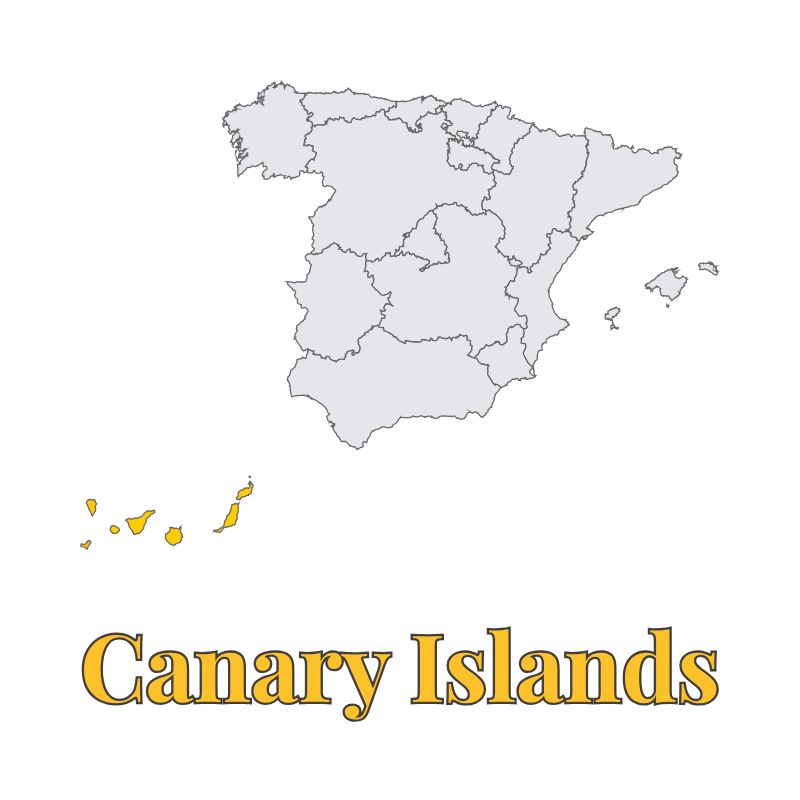
Why the Canary Islands?
The Canary Islands sit in a category of their own in the Spanish property market. They offer something much of Europe can’t, from a genuinely mild year-round climate and varied landscapes, to a lifestyle built around being outdoors almost every day of the year. This is the beach, sunshine, and finger-licking good seafood Spain most buyers dream of. But each island in the archipelago has its own personality and they all hold much more than meets the eye.
The Canaries are easy to oversell if you only focus on weather and beaches. Obviously, the climate is a huge asset, and yes, the islands can work very well for second homes, remote workers, and particular types of long-term transplants. But they also come with downsides, including island logistics, uneven infrastructure between areas, heavy dependence on tourism in parts of the economy, limited land in the best locations, and in some cases a significant gap between the lifestyle image and the day-to-day reality of living there full time. For some, those are drawbacks. For others, they’re exactly what creates value, keeps life simpler, and makes the islands feel less like mainland Europe and more like a genuine subtropical alternative.
Climate and day-to-day livability
The biggest draw is obvious. The Canaries have one of the most stable climates in Europe, which makes them especially attractive to buyers coming from colder or more seasonal markets. For retirees, second-home owners, digital nomads and anyone tired of long winters, that’s not a small thing. It shapes daily life in a very real way.
The trade-off is that “great weather” doesn’t mean every island or every town feels the same. Microclimates matter a lot here. Some areas are greener and cooler, some are windier, some are drier and more exposed, and some resort zones can feel very built around tourism rather than normal local life. From a property point of view, though, that variation is also useful. It gives buyers real choice, whether they want lush hillsides, surf towns, urban living or a quieter second-home base.
Relative affordability and cost of living
Compared with some mainland Spanish hotspots and much of northern Europe, parts of the Canary Islands can still look reasonably priced, especially once you move away from the best-known resort areas and premium coastal pockets. For buyers with flexible geography, that can make the region appealing as both a lifestyle market and a value market.
That said, affordability in the Canaries is uneven. Prime areas, well-located coastal homes and anything with strong views or design appeal can be expensive, and island living can bring costs that aren’t always obvious at first, especially around transport, imported goods, construction logistics and seasonal demand pressure. Still, for buyers who are comparing overall lifestyle value rather than just sticker price, the islands can offer a strong quality-of-life return for the money.
Landscape and lifestyle variety
One of the Canaries’ real strengths is that they’re not interchangeable. Tenerife can feel very different from Lanzarote; Gran Canaria has a broader urban-and-rural mix than many people expect; Fuerteventura is a different proposition again. Volcanic terrain, surf beaches, pine forests, mountain roads, smaller towns and full-service cities all exist within the same island group.
The downside is that buyers need to choose much more carefully than they might on the mainland. You’re not just picking a region. You’re picking an island, then a micro-market within that island, and that choice affects everything from schools and healthcare to rental demand and resale profile. But that same fragmentation is also what creates opportunity. Buyers who understand the differences between islands often find much better-fit properties than those shopping the Canaries as one generic “sunny Spain” destination.
Culture and pace of life
The Canary Islands have a distinct identity shaped by Spain, the Atlantic, Latin America and Africa. That gives the region a cultural feel that’s recognisably Spanish but not identical to the mainland. Day-to-day life is generally more informal, more outdoor-oriented and often less hurried than in larger mainland cities.
The trade-off is that some buyers may find island life limiting over time, especially if they’re used to the density of services, job options and cultural infrastructure you’d get in Madrid, Barcelona or even some smaller mainland capitals. But for others, that’s the whole point. A slower pace, less pressure and a stronger sense of physical separation can be exactly what makes the Canaries appealing as a long-term lifestyle choice.
Who the Canary Island life is for
Buyers Seeking a Rental Property or Second Home
This is one of the strongest buyer profiles for the Canaries. The weather, international visibility and year-round appeal make the islands naturally attractive for second-home ownership. In the right areas, a property can work both as a place for personal use and as a rental asset, depending on local rules and how the purchase is structured. The affordability of a second home in the Canaries, from purchase to maintanance, however, is questionable.
The main caution is that not every island, and not every town, works equally well as a rental market. Some areas are highly tourism-oriented, some are more domestic, and some are simply better for owner use than for income. There are also legal and regulatory considerations around holiday lets that buyers need to treat seriously. But for people who want a lifestyle asset in a market with broad appeal, the Canaries are a very strong contender.
Digital nomads and remote professionals
The Canary Islands are an obvious fit for remote workers, and in many ways they live up to the reputation. Good weather, relatively good flight connectivity, lower intensity than some mainland cities, and a lifestyle that suits flexible work all help. Tenerife and Gran Canaria are usually the most practical choices if you want a full-time base with services and a broader day-to-day ecosystem.
The downside, aside from the obvious higher cost of living than on the mainland, is that some areas can feel transient or heavily geared toward short-term visitors, which isn’t always ideal if you’re trying to build a settled life rather than just spend a few months in the sun. Housing pressure in popular zones can also distort value. But for remote professionals with stable income and realistic expectations, the islands can offer one of the better work-life trade-offs in Europe.
Independently Wealthy Buyers and Lifestyle-Led Relocators
For buyers with capital or external income, the Canaries can be a perfect fit, especially if the goal is climate, privacy, and a lower-friction daily routine. They’re less formal and less status-conscious than some Mediterranean prestige markets, which can be a plus for buyers who want quality of life without quite so much theatre.
The fact that the islands are physically separate from the mainland but so close to continental Europe is also part of the appeal in this segment. That distance can create a stronger sense of retreat and make ownership feel more distinct. The downside, of course, is that island dependence cuts both ways. Logistics, travel, and services can be less convenient than on the mainland. For some buyers, that’s a compromise. For others, it’s exactly why the lifestyle works.
Families Relocating Long Term
The Canary Islands can work for families, especially in the larger and better-served islands such as Tenerife and Gran Canaria. Climate, outdoor living and a generally more relaxed rhythm of life all play in their favour, and some areas offer a solid combination of schools, healthcare and day-to-day practicality.
The main caveat is that island choice matters a lot, and so does town choice within the island. Not every location that works beautifully as a second home makes sense as a full-time family base. Educational options, commutes, year-round services and employment opportunities can narrow quickly outside the main centres. For families with remote income, savings or a clear plan, the Canaries can be very appealing. For those trying to build financial stability after arrival, they can be more complicated than they first appear.
Top Locations to Consider
Tenerife
Tenerife is usually the broadest market for buyers because it offers the most range. You’ve got Santa Cruz and La Laguna for more urban living, the south for resorts and international demand, and quieter inland or northern areas for buyers who want something more local and less tourism-heavy. That makes Tenerife one of the easiest islands to match to different budgets and goals.
Its downside is that it can feel fragmented. Some parts are highly polished and international, others are much more local, and the contrast can be sharp. But from a buying perspective, that also makes Tenerife flexible. You can choose the version of island life that actually suits you.
Gran Canaria
Gran Canaria is one of the most balanced islands in practical terms. Las Palmas gives buyers a real city, not just a resort base, and the island as a whole offers a mix of beach living, suburban areas, mountains and smaller towns. For long-term living, it often makes more sense than people initially assume.
The trade-off is that, like Tenerife, it’s not one coherent market. Lifestyle, pricing and livability vary a lot by zone. But for buyers who want a combination of climate and real day-to-day infrastructure, Gran Canaria is one of the stronger options in the archipelago.
Lanzarote
Lanzarote appeals to buyers who are drawn to design, landscape and a more restrained version of island living. César Manrique’s influence, lower-rise development and a more visually controlled built environment give the island a character that feels very different from the more built-up tourism markets elsewhere.
The downside is that the market is narrower and more lifestyle-specific. It won’t suit everyone, especially buyers who want a large city, broad family infrastructure or maximum urban convenience. But for second-home buyers, design-conscious purchasers and people who want somewhere with a clear identity, Lanzarote can be a very attractive option.
Fuerteventura
Fuerteventura is usually the conversation for buyers who want beach access, open space and a more relaxed, surf-and-water-sports kind of lifestyle. It’s especially appealing for people who are less interested in formal urban life and more interested in weather, sea and simplicity.
Its limitations are also clear. It can feel sparse, windy and less serviced than the larger islands, and that can be a real issue for full-time relocators who need more infrastructure. But for the right buyer, especially a second-home owner or remote worker who wants a looser, more outdoors-focused lifestyle, that sparseness is part of the appeal.
Property Market Considerations
The Canary Islands market is broader than many buyers realise, but it needs to be approached island by island and town by town. Resort areas, premium coastal stock and internationally popular micro-markets tend to be more expensive and more competitive. Inland towns and less obvious locations can offer better value, but that value needs to be measured against practical livability, not just price per square metre.
It’s also worth being clear about what kind of purchase you’re making. Some Canary properties are best understood as lifestyle purchases with occasional rental upside. Others work more clearly as income-generating assets. And some are attractive on paper but come with trade-offs around licensing, maintenance, exposure, seasonality or limited local demand. As with other island markets, due diligence needs to be both legal and practical.
Practical Considerations
The Canary Islands make a strong case for buyers who care about climate, flexibility and a more outdoor-focused way of living. They can work very well for second-home owners, remote workers, buyers with outside income and households looking for a slower rhythm without giving up access to Spain’s legal and healthcare systems.
Healthcare
Healthcare is one of the region’s strengths, and that matters for both full-time relocators and older buyers.
Education
Education is workable too, but families should be realistic: the best range of options is concentrated in the larger population centres, not spread evenly across the islands. Language is another important point.
Language and integration
English is widely used in many international and tourism-driven areas, but full integration still very much depends on speaking Spanish.
Lifestyle and leisure
Transport is one of the quieter issues buyers should think through early. Flights are obviously central to island living, but so is the quality of local road access, town-to-town travel and how dependent daily life becomes on a car. None of this makes the islands impractical. It just means that island convenience needs to be judged differently from mainland convenience.
Educational Opportunities in the Canary Islands
Schools in the Canaries: A Guide for Families
Lorem ipsum dolor sit amet, consectetur adipiscing elit. In quis efficitur nibh, nec ultricies dolor. Etiam ut lectus vulputate, hendrerit tortor tincidunt, pulvinar erat. Nunc orci odio, elementum eget sem vitae, congue viverra mauris. Curabitur vitae nunc vitae enim aliquet fermentum. Curabitur scelerisque dapibus diam ultrices convallis. Praesent eget scelerisque purus. Donec posuere ornare leo dapibus facilisis. Integer efficitur lacus nisl, ac efficitur orci facilisis a. Aenean sem justo, aliquet eu vehicula ut, egestas lobortis libero.