
The Balearic Islands: One of Spain’s most in-demand markets
Mallorca, Menorca, Ibiza, and Formentera offer the kind of Mediterranean lifestyle that buyers tend to have in mind before they even start searching.
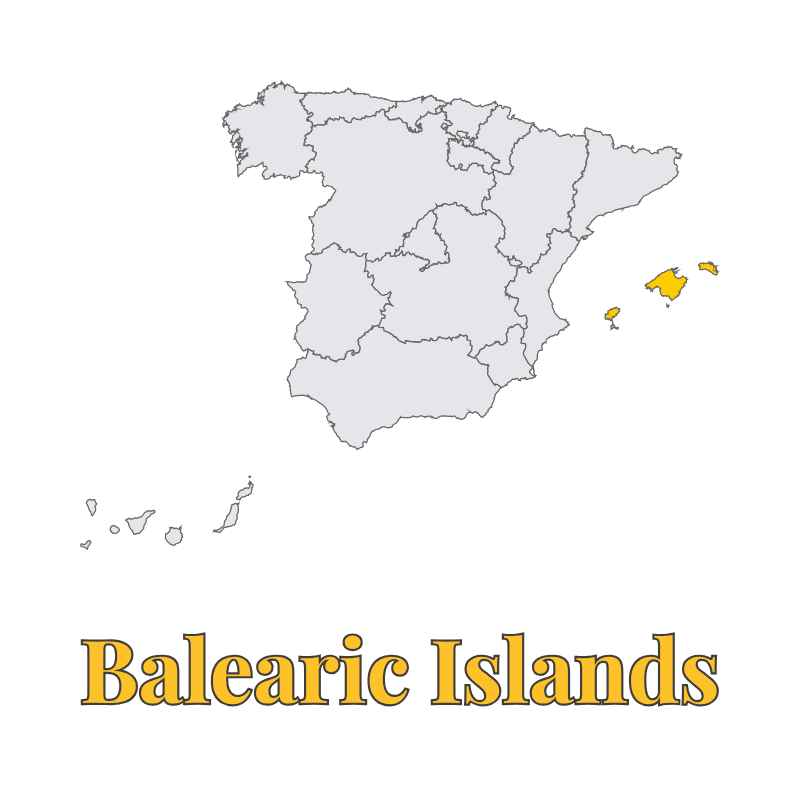
Why the Balearic Islands?
The Balearics are easy to romanticise and just as easy to misunderstand. Yes, they offer high-quality living, strong international appeal and some of the most desirable addresses in Spain. They also come with real constraints like high entry prices, seasonal pressure, limited supply in the best areas, island logistics, infrastructure strain in peak months, and tighter scrutiny around tourism and development than many buyers expect. For some folks, those are obvious dealbreakers.
But those same downsides are also part of what gives the market depth. Limited land and enduring international demand tend to support long-term value. For second-home buyers or well-positioned remote professionals and investors who understand the difference between lifestyle demand and operational reality, the Balearics can be an exceptionally strong market.
Climate and day-to-day quality of life
The obvious draw is the Mediterranean climate. Mild winters, long summers, sea access, outdoor dining, and a lifestyle built around being outside all work strongly in the islands’ favour. If the goal is a second home, a lifestyle move or a property that feels like a genuine escape from northern Europe or a dense urban market, the Balearics are hard to beat.
The trade-off is that island life isn’t always easy. Summer crowding and pressure on services are part of the picture in many areas, especially in Ibiza, Palma and the better-known coastal zones. But from a property point of view, that pressure is also part of what underpins demand. The same popularity that can make August feel hectic is often what supports long-term desirability, resale strength and premium pricing.
Scarcity and pricing
The Balearics are expensive by Spanish standards, and that needs to be said plainly. Prime coastal homes, well-located village properties, quality fincas and anything with real design value or sea views can command very serious prices. In some segments, buyers are competing not just with other lifestyle purchasers but with global wealth.
That said, high pricing here isn’t just a function of branding. It’s also about supply constraints. Islands have physical limits, planning rules matter, and genuinely prime stock is finite. For buyers who want maximum square metres for the budget, the Balearics may not make sense. For buyers who care about scarcity, long-term hold value and owning in a market with built-in supply discipline, that same pricing pressure can be part of the attraction.
International appeal and liquidity
One of the Balearics’ biggest strengths is that they’re legible to an international buyer base. Mallorca has broad mainstream appeal, Menorca tends to attract more understated lifestyle buyers, Ibiza has a very particular global brand, and Formentera is almost entirely about exclusivity, simplicity and scarcity. That international recognition matters because it tends to support liquidity, especially in the better-located parts of the market.
The downside is that this isn’t a hidden-value story. In many areas, buyers are paying for established demand, reputation and lifestyle cachet. But for some purchasers, especially second-home buyers and investors thinking about future resale, that’s exactly the point. You’re buying into a market people already understand and want.
Balearic Lifestyle (beyond the postcard version)
There’s a tendency to reduce the Balearics to beaches, clubs and marinas, but that misses the point. Mallorca in particular has depth: Palma is a proper city, the island interior has substance, and there’s a real year-round residential market. Menorca has a quieter, more restrained appeal. Ibiza, despite the cliché, has rural and family-friendly sides. Formentera is the most niche and the most lifestyle-specific of the group.
The limitation is that not every island works for every buyer. Some are much better for part-time use than full-time relocation. Some are stronger for family life, others for leisure-led ownership. That fragmentation can be confusing, but it’s also where opportunity sits. Buyers who understand the difference between the islands tend to make much better property decisions than those who just buy the Balearic brand.
Whom the Balearics suit best
Buyers Seeking a Rental Property or Second Home
This is probably the most obvious fit. The Balearics work extremely well for second-home ownership because they combine personal-use appeal with strong market visibility. A home here can function as a lifestyle asset first and, depending on the location and legal framework, a rental property second. That’s a powerful combination.
The main caution is that buyers need to separate “desirable” from “rentable” and both from “legally straightforward.” Holiday lets, local regulations and licensing issues need to be treated seriously. It’s not enough to assume that a beautiful property in a popular area will automatically work as a short-term rental. Still, for buyers willing to buy carefully and structure the asset properly, the islands’ high demand and limited supply can make them strong long-term holds.
Digital Nomads and Remote Professionals
For remote workers, the Balearics can be very attractive, but not always for the reasons the marketing suggests. Mallorca, especially around Palma and some of the southwest and central village markets, often makes the most sense because it combines connectivity, services and a year-round residential base. Ibiza can work too, though it’s often more expensive and more seasonal in feel.
The downside is cost. If you’re relocating on a solid but not exceptional remote income, the islands can get expensive fast, especially once housing, transport, schooling or coworking-style lifestyle costs are added in. But for remote professionals who value quality of life, access to airports and a more international environment, the Balearics can still stack up well, especially if the comparison is London, Amsterdam, Paris or similar markets.
Independently Wealthy Buyers and Lifestyle-Led Relocators
This is where the Balearics are particularly strong. For buyers with capital, external income or no dependence on the local wage economy, the islands can offer a very high-quality lifestyle. Privacy, sea access, hospitality, design, wellness, yachting and well-developed luxury infrastructure all support that market.
And while high prices are obviously a downside on paper, they also tend to protect the tone of the market. In practical terms, expensive islands often stay expensive because supply is constrained and demand is international. For buyers thinking in terms of legacy assets, family use or longer-term wealth preservation, that can make the Balearics more compelling than cheaper but less durable alternatives.
Entrepreneurs and Business Owners
For families, the Balearics can work very well, but island choice matters a lot. Mallorca is usually the most practical option because it offers the broadest mix of schools, healthcare, transport and year-round infrastructure. Menorca can also be appealing for families who want a calmer environment and are comfortable with a smaller market.
The caveat is that island living is not automatically family-friendly just because it looks idyllic. Housing costs can be high, the year-round labour market may not suit both adults, and smaller islands can feel limiting over time if daily life depends on a very narrow set of schools or services. For families with a clear budget, a defined plan and ideally some flexibility around work, the Balearics can be excellent. For households trying to make the economics work from scratch, they require more realism.
Families Relocating Long Term
Families are often drawn to Andalucia for the weather, outdoor lifestyle, larger homes, access to beaches and a generally more relaxed rhythm of life. In the right location, it can offer an excellent family lifestyle.
However, this is where due diligence matters most. Schools, hospitals, transport links, language integration, after-school options and access to employment can vary widely. Some parts of Andalucia are very well suited to international families; others are better as second-home markets than as practical full-time bases. For families moving without remote income or substantial savings, the employment question should be addressed before the property question.
Those Relocating to Find Employment
This is where the Balearics are weaker than they first appear. There are jobs, of course, especially in tourism, hospitality, real estate, services and related sectors, but wages often don’t match housing costs, particularly in the more desirable parts of the islands. That gap can be difficult for people relocating without external income.
From a property perspective, though, that imbalance partly explains why the islands have become such a bifurcated market. They work very well for buyers bringing capital or mobile income, and much less well for people relying entirely on local salaries. That’s a real downside socially and practically, but it also reinforces demand from the international buyer profiles who can afford to operate in that environment.
Top Locations to Consider
Mallorca
Mallorca is the broadest and most versatile of the four islands. Palma works for buyers who want city life, airport access and year-round services. The southwest attracts a more established international luxury market. The interior villages appeal to buyers looking for fincas, character and a quieter pace. From a property point of view, Mallorca is often the easiest island to match to very different buyer goals.
Its downside is that success has made it expensive and, in some areas, crowded and highly competitive. Buyers need to be precise. Still, if you want the strongest all-round proposition in the Balearics, Mallorca is usually where the conversation starts.
Menorca
Menorca tends to appeal to buyers who want the Balearic lifestyle without as much noise, branding or social theatre. It’s calmer, more understated and generally more about beaches, boating, family use and slower living than about scene or visibility.
That same calm can also make it feel smaller and less dynamic, especially for full-time relocators who want more infrastructure, more nightlife or a deeper business ecosystem. But for second-home buyers, families and those who value understatement, Menorca’s restraint is often exactly the point.
Ibiza
Ibiza is one of the most recognisable lifestyle markets in Europe, but the real island is more varied than the stereotype suggests. Yes, it has nightlife and a strong premium social market, but it also has rural areas, family-friendly pockets, wellness-led demand and a serious high-end residential segment.
The trade-off is that Ibiza can be intense: expensive, seasonal, logistically demanding in peak periods and heavily shaped by its brand. For some buyers that’s off-putting. For others, it’s what makes the asset class work. Strong global visibility tends to support enduring demand, especially at the top end.
Formentera
Formentera is the most niche market of the four. The elusive, hidden gem. It’s small, exclusive, visually stunning, and very limited in supply. Buyers are usually here for one thing: simplicity paired with scarcity.
The obvious downside is that it’s less practical than the others. Access is more involved, services are narrower, and the market is almost entirely lifestyle-led. But that’s also why it appeals. For buyers who want rarity (at a price) rather than versatility, Formentera can be very compelling.
Property Market Considerations
The Balearic property market is broad in product type but narrow in the sense that good stock is taken seriously and prime stock doesn’t stay overlooked for long. Buyers can still find variation between island interiors, secondary towns and ultra-prime coastal pockets, but this isn’t a market where careless buying gets hidden by general uplift. The spread between average and excellent is wide, and quality matters.
It’s also worth bearing in mind that the Balearics aren’t a generic “buy a villa by the sea” market. Access, orientation, build quality, licensing position, water supply, seasonal use patterns and proximity to year-round services all matter more here than some buyers expect. At the higher end especially, due diligence isn’t just legal and financial. It’s operational and lifestyle-based too.
Practical Considerations
Healthcare
Healthcare is generally strong, especially on Mallorca, and private healthcare is part of the standard setup for many international residents. Education is another area where Mallorca has the edge, simply because it offers the broadest range of schools and family infrastructure. Other islands can work well, but they ask more of buyers in terms of compromise and planning.
Language and Integration
Language is also worth taking seriously. Spanish is essential for full integration, and Catalan is part of everyday life across the islands in different ways. In practice, many international buyers can function comfortably in English in parts of the market, especially in Mallorca and Ibiza, but that’s not the same as actually settling well long term. Buyers planning a real move rather than a part-time lifestyle purchase should assume they’ll need to engage locally, not just administratively.
Educational Opportunities in the Balearic Islands
Schools in Andalusia: A Guide for Families
Andalusia offers a diverse range of educational opportunities for families considering a move to this vibrant region. The area is home to numerous public schools that provide a comprehensive curriculum, ensuring that children receive a well-rounded education. These schools are known for their commitment to academic excellence and cultural enrichment, often incorporating local traditions and history into their teaching. In addition to public options, Andalusia boasts a selection of private and international schools, catering to expatriate families and those seeking bilingual education. These institutions often offer curricula in English and Spanish, providing a seamless transition for children from English-speaking countries. With a focus on both academic and personal development, the schools in Andalusia are well-equipped to nurture young minds and prepare them for future success.