
Andalusia: Lifestyle, Value and Opportunity in Southern Spain
From the energy of Seville to the beaches of the Costa del Sol and the historic beauty of Granada, Andalucia offers a compelling mix of tradition, modern living and relative value.
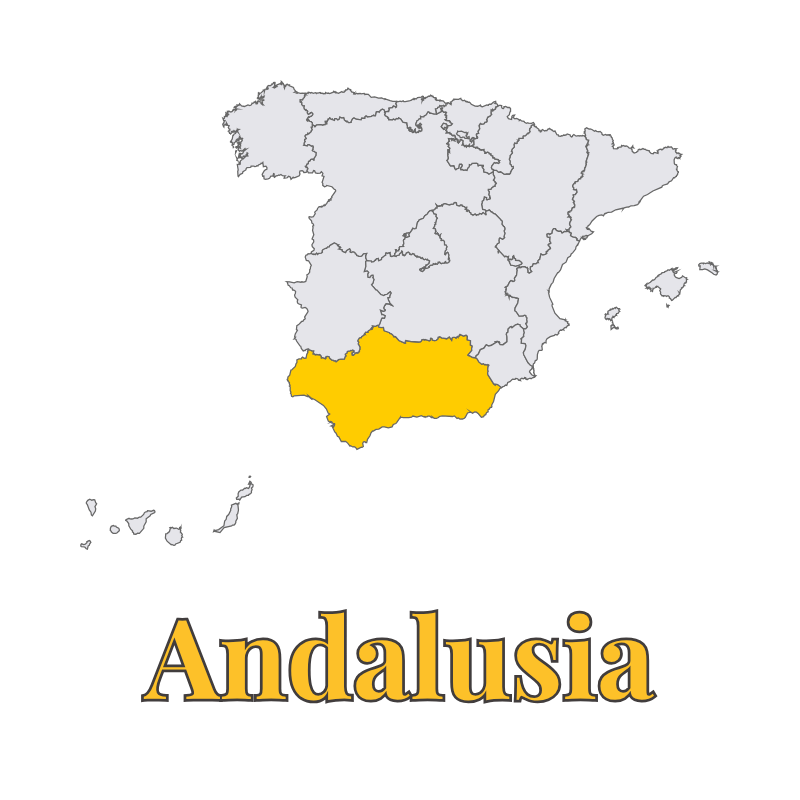
Why Andalusia?
Spain’s southernmost region is one of the country’s most distinctive property markets. It combines rich history, strong cultural identity, varied landscapes and an enviable climate with a lifestyle that continues to attract second-home buyers, investors and long-term relocators from across Europe and beyond.
At the same time, Andalucia should be approached with clear expectations. Compared with Spain’s most economically developed regions, parts of Andalucia still have less advanced infrastructure, slower administration, more limited public transport and fewer high-paying employment opportunities outside the main urban and coastal centres. Andalucia is not the right choice for every buyer, but it remains one of Spain’s most compelling regions for those who value lifestyle, climate, cultural richness and relative property value. Its drawbacks are real: infrastructure is uneven, some areas are less economically dynamic, bureaucracy can be slower and not every location works equally well for year-round living or investment performance.
Yet many of those same drawbacks also create the very qualities that make Andalucia attractive. Less overdevelopment can mean more charm. Slower pace can mean better quality of life. Lower local economic intensity can mean better buying opportunities. For second-home owners, selective investors, digital nomads, entrepreneurs and lifestyle-led relocators, the region can offer excellent long-term value, provided the purchase is matched carefully to the buyer’s actual goals.
Climate and Lifestyle Appeal
The culinary landscape of Andalusia is as diverse as its culture, offering a rich array of flavors and dishes that reflect the region's history and geography. Tapas, small plates meant for sharing, are a cornerstone of Andalusian dining, featuring an assortment of ingredients like olives, cured meats, and fresh seafood. Gazpacho, a chilled tomato soup, provides a refreshing respite during the hot summer months, while the hearty flavors of oxtail stew offer warmth in the cooler seasons.
Seafood is a staple in Andalusia, with dishes like grilled sardines and fried calamari showcasing the bounty of the Mediterranean. The region is also renowned for its sherry wines, produced in the 'Sherry Triangle' of Jerez, Sanlúcar de Barrameda, and El Puerto de Santa María. These fortified wines complement the local cuisine perfectly, enhancing the dining experience with their unique flavors.
Andalusian culinary practices emphasize fresh, locally sourced ingredients, with an emphasis on simplicity and flavor. Whether dining in a bustling city restaurant or a quaint village eatery, the food of Andalusia offers a delightful journey through the tastes and traditions of southern Spain.
Relative Value and Cost of Living
Compared with many parts of Northern Europe, North America and some of Spain’s more expensive regions, Andalucia can still offer attractive value. In many locations, buyers can secure more internal space, outside space or lifestyle quality for their budget than in Madrid, Barcelona, the Balearics or other prime markets.
That said, affordability is not uniform. Prime areas such as Marbella, parts of Malaga and established coastal zones have become much more expensive, while lower local salary levels in many parts of the region can create a gap between property appeal and local earning potential. For buyers with external income, remote income or capital, this often works in their favour. For local job seekers relocating without a strong income plan, it requires much more careful location selection.
Culture, Character and Quality of Life
Andalucia has a cultural identity that is difficult to replicate elsewhere in Spain. Flamenco, Moorish architecture, tapas culture, local festivals and an emphasis on social life give the region a strong sense of place. This is not just a tourism benefit; it is one of the reasons buyers feel emotionally attached to the area and why many rental guests return repeatedly.
The trade-off is that daily life can feel slower and less streamlined than in more corporate, internationally structured regions. Administrative processes can require patience, and in smaller towns the pace of life may feel limiting to buyers who prioritise efficiency and convenience. For many second-home owners, retirees and lifestyle-led relocators, that same slower rhythm is part of the appeal. It is exactly what creates the feeling of escape, authenticity and long-term emotional value.
Diverse Landscapes and Micro-Markets
One of Andalucia’s greatest strengths is its variety. Buyers can choose between coastal apartments, golf properties, historic city homes, village houses, mountain retreats and larger inland estates. This diversity makes the region suitable for very different strategies, whether the goal is holiday rental income, a second home, a family relocation or a longer-term lifestyle investment.
The downside is that the region is highly uneven. Infrastructure, rental depth, transport links, healthcare access, schooling options and resale liquidity vary dramatically from one town to another. In practical terms, this means buyers should not think in terms of “Andalucia” as one single market. They should think in terms of specific micro-locations. For experienced buyers, that unevenness can create opportunity: less polished areas often come with better entry prices, more character and less competition.
Who Andalusia is for
Buyers Seeking a Rental Property or Second Home
For second-home buyers and rental investors, Andalucia can be particularly attractive because the region is easy to market emotionally. Sun, culture, food, beaches and golf remain powerful draws, and many buyers want a property they can both enjoy personally and let selectively.
The main caution is that not every location performs equally well as a rental asset. Some areas depend heavily on seasonality, some have limited year-round demand, and some are charming in lifestyle terms but weak in access or occupancy. Even so, one of the hidden benefits of Andalucia’s less developed areas is that they can offer a more distinctive guest experience. Lower density, more character and a less commercial atmosphere can be exactly what short-stay and second-home markets respond to.
Digital Nomads and Remote Professionals
For digital nomads and remote workers, Andalucia can work very well, especially in and around better-connected hubs such as Malaga and parts of the Costa del Sol, where international access, coworking culture and lifestyle infrastructure are stronger.
Outside the main hubs, buyers may find that internet quality, transport convenience and professional networking opportunities are less consistent. That is a disadvantage for some. For others, it is the reason to choose the region: less density, more space, a calmer environment and a significantly better lifestyle-to-cost ratio than many northern European cities.
Independently Wealthy Buyers and Lifestyle-Led Relocators
Compared with many parts of Northern Europe, North America and some of Spain’s more expensive regions, Andalucia can still offer attractive value. In many locations, buyers can secure more internal space, outside space or lifestyle quality for their budget than in Madrid, Barcelona, the Balearics or other prime markets.
That said, affordability is not uniform. Prime areas such as Marbella, parts of Malaga and established coastal zones have become much more expensive, while lower local salary levels in many parts of the region can create a gap between property appeal and local earning potential. For buyers with external income, remote income or capital, this often works in their favour. For local job seekers relocating without a strong income plan, it requires much more careful location selection.
Entrepreneurs and Business Owners
For those looking to start a business, Andalucia can offer appealing entry costs, strong tourism-driven demand in certain sectors and good long-term potential for hospitality, wellness, food and beverage, property management, relocation services and remote-first businesses.
The challenge is that bureaucracy can be slow, the local economy is uneven and consumer spending power varies significantly by location. A business model that works in Marbella or Malaga may not translate to a secondary inland market. Still, that same market fragmentation can create openings: lower-cost areas may offer easier entry, lower overheads and less direct competition for entrepreneurs who choose carefully and target the right clientele.
Families Relocating Long Term
Families are often drawn to Andalucia for the weather, outdoor lifestyle, larger homes, access to beaches and a generally more relaxed rhythm of life. In the right location, it can offer an excellent family lifestyle.
However, this is where due diligence matters most. Schools, hospitals, transport links, language integration, after-school options and access to employment can vary widely. Some parts of Andalucia are very well suited to international families; others are better as second-home markets than as practical full-time bases. For families moving without remote income or substantial savings, the employment question should be addressed before the property question.
Those Relocating to Find Employment
Andalucia can absolutely work for employed relocators, but expectations should be realistic. Compared with Madrid, Barcelona or some northern regions, the job market can be narrower and wages can be lower, particularly outside major cities and established business centres.
That said, this is also one reason property can remain comparatively accessible in many areas. Buyers who already have a role secured, work in portable sectors, or can commute strategically may find that they gain a better quality of life than they would in more expensive employment hubs. In other words, lower infrastructure intensity and lower salaries can be a disadvantage in labour-market terms, but also a reason the region remains attractive from a property-value perspective.
Top Locations to Consider
Seville
Seville offers culture, architecture, energy and one of Spain’s most vibrant urban lifestyles. It appeals to buyers who want a real city with strong identity, excellent food and year-round life beyond pure tourism.
Its drawbacks include extreme summer heat, less direct beach access and a market that is stronger for lifestyle buyers than for everyone seeking easy coastal rental performance. For the right buyer, however, Seville’s authenticity and year-round cultural depth are exactly what make it attractive as a long-term base.
Malaga
Malaga is one of Andalucia’s strongest all-round markets. It offers an airport, beach access, cultural infrastructure, growing international appeal and good positioning for both relocators and investors.
The downside is that its success is now reflected in pricing. In sought-after areas, buyers are no longer accessing “undiscovered” value. Yet that maturity is also a strength: Malaga tends to appeal to buyers who want better infrastructure, stronger connectivity and more predictable year-round demand.
Granada
Granada offers history, atmosphere, relative affordability and a youthful energy supported by its university population. It remains attractive for buyers looking for culture, walkability and a property market that can still feel more accessible than the coast.
The trade-off is that it is less internationally connected than Malaga and offers a smaller employment base. For second-home owners, academics, students, culture-led buyers and those who value uniqueness over convenience, these limits are often outweighed by character and price point.
Marbella
Marbella remains the standout choice for luxury buyers, lifestyle-driven investors and those seeking a high-end international market. It offers prestige, golf, marinas, strong service infrastructure and appeal to an affluent global clientele.
The obvious downside is cost. Entry prices are higher, competition is stronger and parts of the market are highly brand-driven. Still, for buyers focused on premium rental demand, international resale liquidity and established prestige, Marbella’s maturity is part of its value.
Inland Towns and Secondary Markets
Areas such as Ronda, Jaen and smaller inland towns can offer excellent charm, larger properties and lower entry prices. They appeal to buyers looking for authenticity, slower living and more house for the money.
Their limitations are equally clear: weaker transport links, fewer employment options, thinner rental demand in some locations and a more selective resale audience. Yet for some second-home buyers, retreat-style owners and lifestyle relocators, those limitations are precisely what make these markets attractive.
Property Market Considerations
The Andalucian market is broad and highly segmented. Coastal and internationally recognised areas usually command a premium because they combine lifestyle appeal with stronger access and rental visibility. Inland and secondary markets can offer better value, but require more precision in strategy.
A buyer should always distinguish between a property that is attractive to them personally and a property that will perform well as an investment. In Andalucia, that distinction matters. Some homes are ideal as long-term lifestyle assets but less suitable for short-term rental. Others work well as rental properties but may not offer the same quality of life for permanent residence.
As with any purchase in Spain, local guidance is essential. A reputable agent, a good independent lawyer and a realistic financing plan remain crucial. In a region as varied as Andalucia, local knowledge is not a bonus; it is central to making the right decision.
Practical Considerations
Healthcare
Healthcare in Spain is generally strong, and Andalucia offers both public and private options. In larger cities and well-established coastal areas, access is usually straightforward.
In more rural or less connected locations, services can be less immediate and more car-dependent. For some buyers, this is a serious consideration. For others, the trade-off is worthwhile in exchange for space, price and lifestyle.
Education
Families will find a range of schooling options, including public education and international schools in selected areas. The strongest choices are usually concentrated around larger cities and internationally established coastal zones.
This means that a beautiful property in a remote location is not automatically a practical family choice. Buyers with children should select area first and property second.
Language and Integration
Areas such as Ronda, Jaen and smaller inland towns can offer excellent charm, larger properties and lower entry prices. They appeal to buyers looking for authenticity, slower living and more house for the money.
Their limitations are equally clear: weaker transport links, fewer employment options, thinner rental demand in some locations and a more selective resale audience. Yet for some second-home buyers, retreat-style owners and lifestyle relocators, those limitations are precisely what make these markets attractive.
Educational Opportunities in Andalusia
Schools in Andalusia: A Guide for Families
Andalusia offers a diverse range of educational opportunities for families considering a move to this vibrant region. The area is home to numerous public schools that provide a comprehensive curriculum, ensuring that children receive a well-rounded education. These schools are known for their commitment to academic excellence and cultural enrichment, often incorporating local traditions and history into their teaching.
In addition to public options, Andalusia boasts a selection of private and international schools, catering to expatriate families and those seeking bilingual education. These institutions often offer curricula in English and Spanish, providing a seamless transition for children from English-speaking countries. With a focus on both academic and personal development, the schools in Andalusia are well-equipped to nurture young minds and prepare them for future success.