
Basque Country: Polished and distinctive
One of Spain’s most compelling regions for buyers who want something more structured, more design-conscious and, frankly, a bit more grown-up than the usual lifestyle-market clichés.
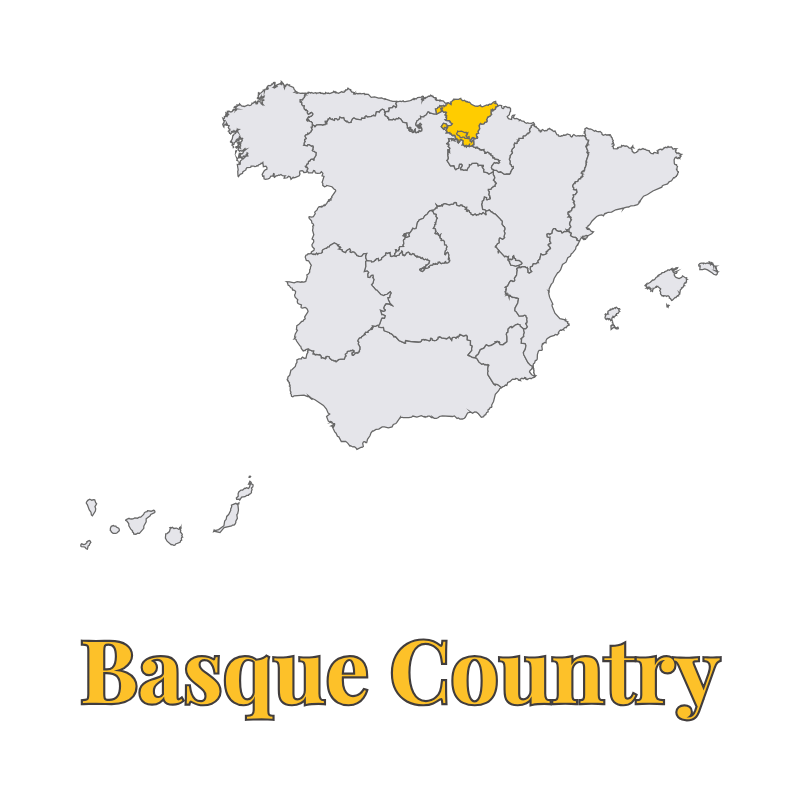
Why Basque Country?
Basque Country, or Euskadi, combines strong local identity, serious food culture, well-run cities, green landscapes and a level of infrastructure that puts it among the country’s most functional places to live. From a property point of view, though, it’s not a broad, easy market in the way some coastal regions are.
Basque Country comes with real trade-offs. It’s more expensive than many parts of Spain, the weather is cooler and wetter than the Mediterranean, and the culture can feel quite self-contained to outsiders at first. It’s also not especially geared toward buyers looking for a simple sun-and-beach second home. But those same factors are also what give the region an edge. Higher barriers to entry, stronger local identity and more disciplined urban development tend to create a market that feels stable, high quality and less exposed to the usual overdevelopment issues.
Culture and identity
Basque Country has one of the strongest regional identities in Spain, and that’s a major part of its appeal. Euskara, the Basque language, gives the region a distinct cultural texture, and there’s a real sense that local traditions, institutions and ways of life still matter. That translates into a place that feels rooted, confident and very much itself.
The downside is that it can take time to settle in, especially if you’re arriving without Spanish and expecting an immediately international or expat-friendly environment. In some parts of the region, it helps a lot to understand that you’re not just moving to “northern Spain” in a generic sense. You’re moving somewhere with its own cultural logic. For some buyers, that’s a barrier. For others, it’s exactly why the region feels more substantial and less interchangeable than other lifestyle destinations.
Food, lifestyle, and everyday standards
This is one of the few regions where the food culture genuinely affects day-to-day quality of life. Pintxos, markets, produce, seafood and a generally high standard of dining all make Basque Country a very easy place to enjoy living in. It’s one of those markets where lifestyle value isn’t just about scenery or climate. It’s built into daily routines.
The trade-off is that quality tends to come at a price. Basque Country isn’t cheap by Spanish standards, especially in the best parts of San Sebastián and certain areas of Bilbao. But from a real-estate perspective, that stronger spending culture and higher baseline quality can also support more resilient demand. Buyers aren’t just paying for a postcard. They’re buying into a region with real day-to-day substance.
Landscape and climate
Basque Country has a very different natural profile from the Spain many international buyers first imagine. It’s green, coastal and hilly, with surf beaches, cliffs, forests and mountain landscapes rather than dry heat and resort-style sprawl. For buyers who are tired of overheated southern markets or want a more Atlantic, year-round feel, that’s a serious plus.
The obvious downside is the weather. This isn’t the part of Spain people move to for 300 days of sunshine. It’s wetter, cooler and more seasonal in mood. That can limit its appeal for buyers who want easy winter sun or a very straightforward holiday-rental proposition. On the other hand, that same climate keeps the landscape green, makes summers more comfortable and reinforces the sense that this is a place for living in, not just holidaying in.
Infrastructure and quality of life
From a practical point of view, Basque Country is one of the best-functioning regions in Spain. Its infrastructure is strong, cities are generally well maintained, healthcare is excellent, and public space tends to be taken seriously. For buyers relocating full time, especially professionals and families, this matters a lot more than glossy lifestyle messaging.
The downside is that those strengths are priced in. You’re not getting “undiscovered value” here in the way you might in a less mature market. But for many buyers, that’s not a drawback so much as a sign of market quality. A well-run region with limited stock in the best locations often makes for a more defensible long-term hold than a cheaper market with weaker fundamentals.
Who's going to love Basque Country
Buyers Seeking a Rental Property or Second Home
Basque Country can work well as a second-home market, but it’s a more selective one than the Mediterranean or the islands. This is usually a better fit for buyers who want food, culture, city life, coastal scenery and a strong sense of place, rather than heat and pool-driven holiday living. San Sebastián, Hondarribia and selected coastal towns naturally stand out here.
From an investment angle, it’s worth being realistic. This isn’t the easiest short-term rental play in Spain, and entry pricing in the top locations can be high. But the upside is that demand tends to be more quality-driven and less purely seasonal. That can work well for buyers who want an asset with long-term appeal, not just peak-summer occupancy.
Independently Wealthy Buyers and Lifestyle-Led Relocators
For buyers with capital or external income, Basque Country has a lot going for it. It offers discreet wealth rather than overt flash, which tends to appeal to people who value quality, privacy and cultural depth over spectacle. San Sebastián in particular attracts this kind of buyer, but so do parts of the coast and selected inland areas.
The fact that the region is a bit of an acquired taste is actually part of its strength in this segment. It filters the market. Buyers who choose Basque Country usually do so very intentionally, and that tends to support pricing in the better locations. In other words, its lack of mass-market appeal can make it feel more durable and less vulnerable to passing lifestyle trends.
Entrepreneurs and Business Owners
Basque Country is one of the better regions in Spain for business-minded buyers, especially compared with markets that lean heavily on tourism and second-home demand. Bilbao has real economic depth, and the wider region has a stronger industrial, professional and services base than many international buyers realise.
The downside is that it’s not necessarily an easy place to launch something casually. Costs can be higher, expectations are higher, and the market can feel more locally embedded than in highly internationalised resort economies. Still, for founders who want a serious regional base rather than a purely lifestyle address, that can be a real advantage. There’s more underlying substance here than in many markets that look easier from the outside.
Families Relocating Long Term
For families, Basque Country is one of the strongest regions in Spain if the budget works. Good schools, strong public services, safer-feeling cities, better infrastructure and a more organised daily environment all play in its favour. Bilbao and Vitoria-Gasteiz are especially strong from a practical family-living perspective.
The obvious caveat is cost, particularly in San Sebastián and some premium coastal areas. There’s also the cultural factor: for some international families, a region with two working languages and a strong local identity may feel like more of an adjustment than a mainstream expat market. But for households planning a real move rather than a soft-landing lifestyle experiment, that same depth can be a strength. It tends to support integration, stability and a better quality of everyday life.
Those Relocating to Find Employment
This is one of the areas where Basque Country stands out. Compared with many lifestyle-driven Spanish regions, it offers a more serious employment base and a stronger overall economy. That makes it a more credible option for buyers moving for work or hoping to find employment after relocating.
That said, it’s still not a low-barrier market. Professional roles often require strong Spanish, and in some sectors local knowledge matters. Housing costs can also take a sizeable bite out of earnings in the most desirable cities. But if the move is being driven by a real job, a strong sector fit or a business opportunity, Basque Country often makes more practical sense than the more obvious sunbelt regions.
Top Locations to Consider
Bilbao
Bilbao is the region’s most versatile property market. It has the broadest economic base, the deepest urban infrastructure and a real city identity that goes beyond tourism. It works well for professionals, families and buyers who want a place that functions year round without relying on seasonal lifestyle appeal.
Its downside is that it’s still a city market, so buyers looking for postcard coastal living may find it too urban. But for serious relocators, that urban substance is exactly what makes it compelling.
San Sebastián
San Sebastián is the prestige market. It combines architecture, beach access, food culture and a very polished overall feel. It’s one of the most desirable addresses in Spain, full stop, and it tends to attract buyers who care about elegance, liveability and scarcity.
The trade-off is price. San Sebastián is expensive, and buyers need to go in with clear expectations. It’s not a value market. Still, for people who can afford it, the city’s combination of beauty, walkability and long-term demand is hard to replicate.
Vitoria-Gasteiz
Vitoria-Gasteiz is often the most rational choice in the region. It’s calmer, greener and typically better value than Bilbao or San Sebastián, while still offering very strong quality of life. For families, professionals and buyers who prioritise day-to-day liveability over profile, it can be one of the smartest plays in Basque Country.
Its limitation is that it’s less internationally known and less emotionally immediate than the coast. But from a property point of view, that lower profile can be a plus. It often means less hype and more substance.
Hondarribia
Hondarribia has obvious appeal for buyers who want charm, coast and a smaller-scale setting with real character. It’s attractive, well preserved and well placed near the French border, which gives it a very particular cross-border feel.
The downside is that it’s a smaller, more niche market, so stock can be limited and pricing can stay firm relative to size. But for second-home buyers and those who want something more intimate than a city base, that scarcity is often part of the appeal.
Property Market Considerations
Basque Country is generally a quality market rather than a bargain market. Buyers will find a spread between city apartments, coastal homes and more traditional stock in smaller towns, but the region’s best areas are well understood and usually priced accordingly. This is not a place where you should expect southern-Spain pricing with northern-Europe-style infrastructure.
What it can offer, though, is a more stable and better-functioning ownership experience. Good urban planning, stronger services and limited overdevelopment all help. That doesn’t remove the need for careful due diligence, but it does mean that buying here often feels more grounded than in regions where the market runs ahead of local infrastructure or long-term planning.
Practical Considerations
Basque Country isn’t Spain’s easiest sell, and that’s part of why it holds up so well. It’s wetter, pricier, more culturally specific and less instantly legible than the country’s better-known second-home markets. But for buyers who want infrastructure, cultural depth, a serious standard of living in a region that feels coherent and well run, it can be one of the strongest options in the country.
Healthcare
Healthcare is one of the region’s strengths, and that matters for both full-time relocators and older buyers.
Education
Education is also strong, with a solid mix of public and private options, though international schooling is naturally more concentrated in the bigger cities. Basque Country offers various educational options, including public schools and private international schools following British or American curriculums.
Language and integration
Spanish and Basque are the primary languages spoken in Basque Country. Spanish will get you a long way, but Basque identity and language are part of everyday life here. That doesn’t mean newcomers aren’t welcome. It just means integration tends to work better when people engage with the region on its own terms rather than expecting it to adapt entirely to them.
Lifestyle and leisure
Basque Country's lifestyle centers around community, culinary experiences, and outdoor activities. The local cuisine, featuring pintxos, fresh seafood, and regional specialties like bacalao a la vizcaína (cod in a delectable tomato sauce), is a highlight.
Outdoor activities are abundant, with opportunities for hiking in the Pyrenees, surfing along the coast, and exploring scenic routes. Cultural events, such as the San Sebastián International Film Festival and Bilbao's Aste Nagusia, provide entertainment and a chance to engage with local traditions.
Educational Opportunities in the Basque Country
Schools in Basque Country: A Guide for Families
Lorem ipsum dolor sit amet, consectetur adipiscing elit. In quis efficitur nibh, nec ultricies dolor. Etiam ut lectus vulputate, hendrerit tortor tincidunt, pulvinar erat. Nunc orci odio, elementum eget sem vitae, congue viverra mauris. Curabitur vitae nunc vitae enim aliquet fermentum. Curabitur scelerisque dapibus diam ultrices convallis. Praesent eget scelerisque purus. Donec posuere ornare leo dapibus facilisis. Integer efficitur lacus nisl, ac efficitur orci facilisis a. Aenean sem justo, aliquet eu vehicula ut, egestas lobortis libero.